
How Many Tablespoons for a Cup of Coffee? Your Complete Guide to the Perfect Ratio

Updated: Sep 6
You wake up, head to the kitchen, and reach for your favorite bag of Peacemaker Coffee. You want that perfect, bold cup to kickstart your day of service: whether you’re heading to the precinct, the classroom, or the hospital. But as you stand there with your scoop in hand, a question stops you:How many tablespoons of coffee do I actually need for one cup?
It seems like a simple question, but if you’ve ever brewed a pot that tasted like "brown water" or, conversely, something so strong it could wake the dead, you know that the "eyeball method" is a recipe for inconsistency. At Peacemaker Coffee Company, we believe thatcoffee with published sample-specific mold-and-yeast testingdeserves a precise brew.
In this comprehensive guide, we will dive deep into the science of coffee ratios. We'll cover why a "cup" isn't always 8 ounces, how bean density affects your scoop, and exactly how many tablespoons you need for every brewing method from drip to cold brew. By the end of this article, you’ll be the "Chief Brewing Officer" of your own kitchen.
The Great "Cup" Confusion: Why Your Measurements Might Be Off
The first hurdle in answering "how many tablespoons for a cup of coffee" is defining what a "cup" actually is. In the United States, we are taught that a standard cup is 8 fluid ounces. However, the world of coffee makers plays by different rules.
Most automatic drip coffee makers (like Mr. Coffee, Keurig, or Cuisinart) define a "cup" as5 or 6 fluid ounces. If you fill your water reservoir to the "6 cup" line, you are likely only using 30 to 36 ounces of water, not 48 ounces.
Why The Discrepancy?
Historically, coffee was served in smaller porcelain cups rather than the giant 16-ounce "travel mugs" we use today. This legacy measurement has stuck around in the manufacturing of coffee carafes.
Standard Mug:8–12 oz
Coffee Maker "Cup":5–6 oz
Large Travel Tumbler:16–20 oz
When calculating your coffee-to-water ratio, you must first determine the actual volume of water you are using. If you use a 12-ounce mug but follow instructions for a "6-ounce cup," your coffee will taste drastically different. This is why understanding thecoffee with published sample-specific mold-and-yeast testing standardswe follow is so important: we want you to taste the bean's quality, not just the water.
The Golden Ratio: The Science of 1:16
In the specialty coffee industry, we use a "coffee-to-water ratio" to ensure consistency. The most widely accepted "Golden Ratio" for a balanced cup of coffee is1:16 or 1:17.
This means that for every 1 gram of coffee, you use 16 or 17 grams of water.
Why Follow a Ratio?
Coffee extraction is a chemical process. When hot water hits ground coffee, it dissolves various compounds:
Fats and Acids:These come out first (sour/bright notes).
Sugars:These come out next (sweetness/balance).
Plant Fibers/Tannins:These come out last (bitterness).
If you use too much water (a 1:20 ratio), you "over-extract" the beans, pulling out those bitter tannins. If you use too little water (a 1:10 ratio), you "under-extract," leaving the coffee tasting sour and thin. Using acoffee with published sample-specific mold-and-yeast testinglike ourRookie Light Roastensures that when you hit that 1:16 sweet spot, you are tasting the purest profile of the bean.

Tablespoons vs. Grams: Why Weight Wins
While this guide focuses on tablespoons, it’s important to understand why professional baristas prefer grams.
A level tablespoon of coffee doesn't always weigh the same. Factors that change the weight of a tablespoon include:
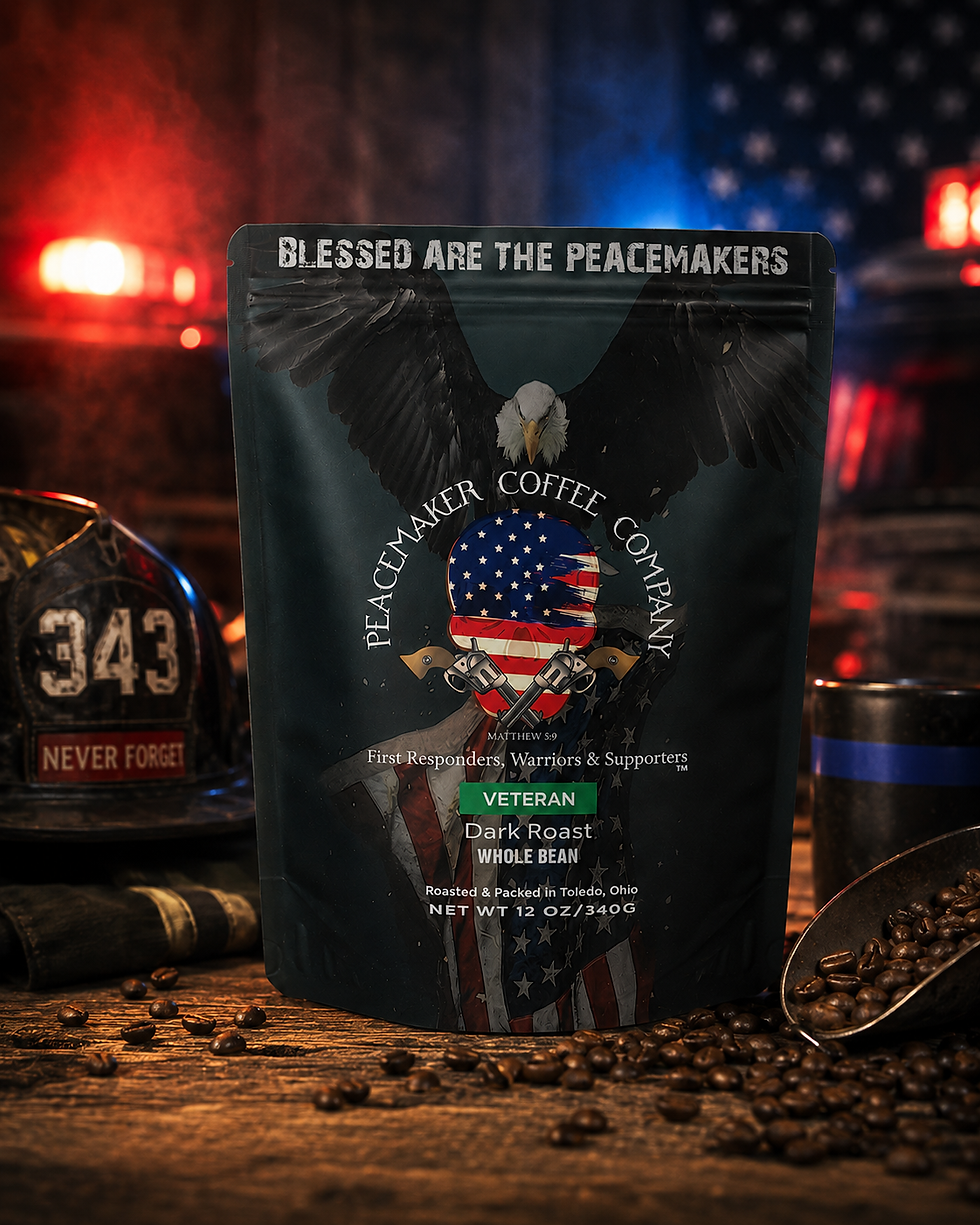
Roast Level:Darker roasts, like ourVeteran Dark Roast, are more porous and "puffed up." They are less dense than light roasts. Therefore, a tablespoon of dark roast might only weigh 5 grams, while a tablespoon of light roast might weigh 7 grams.
Grind Size:Fine grounds pack together more tightly in a spoon than coarse grounds.
Freshness:Freshly roasted beans contain more CO2, which can affect how they sit in a measuring tool.
The Rule of Thumb:1 level tablespoon of ground coffee is approximately5-7 grams. For the sake of this guide, we will use a standard average of6 grams per tablespoon.
The Quick Answer: Tablespoons per Cup Size
If you just want the "quick and dirty" numbers for your morning brew, use this reference for a standard medium-strength cup (using the 1:16 ratio):
Water Volume | Coffee Amount (Grams) | Coffee Amount (Tablespoons) |
6 oz (Coffee Maker Cup) | 10.5g | ~2 Tablespoons |
8 oz (Standard Mug) | 14g | ~2.5 Tablespoons |
10 oz (Large Mug) | 17.5g | ~3 Tablespoons |
12 oz (Tall Mug) | 21g | ~3.5 Tablespoons |
16 oz (Travel Mug) | 28g | ~4.5 to 5 Tablespoons |
Note: For those who prefer a bolder, stronger cup, you can easily increase these amounts by half a tablespoon.
Adjusting Your Ratio by Brew Method
Not all brewing methods are created equal. Some require a shorter contact time between water and coffee, while others involve total immersion. Here is how to adjust your tablespoons for the best result.
1. Automatic Drip Coffee
This is the most common method in American households. Because the water passes through the grounds relatively quickly, a1:16 ratiois ideal.
The Math:For a standard 10-cup pot (which is actually 50-60 ounces), you’ll want about10 to 12 tablespoonsof ground coffee.
The Coffee:Our2nd Amendment Medium Roastis perfect for drip machines, delivering a smooth, balanced flavor without being too acidic.
French press is a total-immersion method, meaning the coffee sits in the water for the entire brew time (usually 4 minutes). This often requires a slightly higher coffee-to-water ratio to achieve that signature heavy body.
Ratio:1:12 to 1:15
The Math:For a 17-oz French Press, use about30–35 gramsof coffee, which is roughly5-6 tablespoons.
Tip:Use a coarse grind to avoid "muddy" coffee and to ensure thepublished testing informationaren't masked by over-extraction.
Pour-over brewing allows for more control and highlights the subtle notes of specialty beans.
Ratio:1:17 (for a cleaner, brighter cup)
The Math:For a 10 oz pour-over, use18 gramsof coffee, or about3 level tablespoons.
The Coffee:Try theRookie Light Roastfor this method to experience its full complexity.
Cold brew is a different beast entirely. It uses cold water and a very long steep time (12-24 hours). This requires a "concentrate" ratio.
Ratio:1:4 to 1:8
The Math:For every 1 cup (8 oz) of water, you’ll need about1/4 cup (4 tablespoons)of coarsely ground coffee.
The Peacemaker Way:Use our5lb Bulk Coffee optionsfor cold brew, as it requires a large volume of grounds.
5. Espresso
Espresso is a highly concentrated form of coffee. While it's measured in "shots," the ratio is typically 1:2.
The Math:A double shot usually uses18-20 gramsof coffee. This is roughly3 level tablespoonsof finely ground coffee, packed tightly into the portafilter.

The Role of Roast Level in Your Scoop
As mentioned earlier, the roast level of your coffee affects its density. If you are using a dark roast like ourVeteran Dark Roast, the beans have expanded more during roasting.
Dark Roasts:If you find your dark roast tastes too bitter, try using slightlyfewertablespoons or a coarser grind.
Light Roasts:These are more dense. If your light roast tastes sour or weak, you might need to add an extra half-tablespoon to reach your desired strength.
Peacemaker focuses on sourcing, roasting, and transparent quality controls; this article does not rely on an unverified quality percentile or grading claim.
Why Quality Matters: Mold-Tested and Low-Acidity
You can have the perfect ratio and the most expensive measuring spoons, but if your beans are low-quality, your coffee will still lack the "clean" feeling you deserve. Testing practices vary by coffee company and product. Compare current laboratory reports, methods, dates, sample scope, and the claims a brand actually supports.
Evidence note: Peacemaker publishes independent January 2026 laboratory reports for selected Light, Medium, Decaf Medium, and Dark roast samples. Each reported mold and yeast below 10 CFU/g for the identified sample and lot. The current published reports cover mold and yeast only; do not infer results for analytes not listed in the reports. Current reports: https://www.peacemakercoffeecompany.com/coffee-testing-standards
Stomach Health:Our low-acidity beans mean you can enjoy a stronger cup (a 1:14 ratio) with a smoother, less sharp flavor profile; individual tolerance varies.
The Mission:Every scoop you measure out supports ourmission to give back. We donate coffee to the heroes of our community: veterans, first responders, and teachers.
Troubleshooting Your Brew: How to Dial It In
Even with a guide, you might need to make adjustments based on your personal palate. Here is how to "dial in" your perfect cup:
If Your Coffee Is Too Bitter:
The Cause:Over-extraction. You’ve pulled too many solids out of the beans.
The Fix:Use a slightly larger grind size, OR use a little less coffee (1/2 tablespoon less), OR lower your water temperature.
If Your Coffee is Too Sour or "Thin":
The Cause:Under-extraction. The water didn't have enough "time" or "surface area" to pull out the sugars.
The Fix:Use a finer grind size, OR increase your coffee (add 1/2 tablespoon), OR make sure your water is hot enough (between 195°F and 205°F).
If Your Coffee is "Muddy":
The Cause:Too many "fines" (tiny dust-like particles) or an inconsistent grind.
The Fix:Invest in a better burr grinder or try our pre-ground options, which are ground to precise industrial standards.

Printable Cheat Sheet: Coffee Tablespoon Guide
Save this table or print it out to keep inside your pantry!
To Make... | Mild (1:18) | Standard (1:16) | Strong (1:14) |
1 Cup (6oz) | 1.5 Tbsp | 2 Tbsp | 2.5 Tbsp |
2 Cups (12oz) | 3.5 Tbsp | 4 Tbsp | 5 Tbsp |
4 Cups (24oz) | 7 Tbsp | 8 Tbsp | 10 Tbsp |
8 Cups (48oz) | 14 Tbsp | 16 Tbsp | 20 Tbsp |
12 Cups (72oz) | 21 Tbsp | 24 Tbsp | 30 Tbsp |
Frequently Asked Questions (FAQ-AI)
1. How many tablespoons of coffee for 12 cups?
For a full 12-cup carafe (usually 60-72 oz of water), you should use between20 and 24 level tablespoonsof ground coffee. This is roughly 1.5 to 2 standard measuring cups of grounds.
2. Is a coffee scoop the same as a tablespoon?
Not always! Most "standard" coffee scoops that come with machines are actually2 tablespoons (roughly 10-12 grams). Always check your scoop's volume before assuming it's a single tablespoon.
3. Does it matter if the tablespoon is "heaping" or "level"?
Yes! Consistency is key. Always uselevel tablespoons. A heaping tablespoon can contain 50% more coffee than a level one, which will throw your ratio off and lead to inconsistent taste.
4. Should I measure whole beans or ground coffee?
You can do both! Interestingly, a tablespoon of whole beans and a tablespoon of ground coffee weigh almost exactly the same amount. However, it is always easier and more accurate to measure your coffeeafterit has been ground when using volume (tablespoons).
5. Why does my coffee taste different every day even when I use the same scoop?
It could be your water! Coffee is 98% water. If you use tap water, the mineral content can fluctuate. For the best result with ourquality-focused coffee, use filtered water.
Final Thoughts: The Perfect Scoop for a Perfect Mission
Measuring your coffee shouldn't be a chore, but taking those few extra seconds to ensure you have the right number of tablespoons makes a world of difference.
Whether you're brewing a pot of2nd Amendment Medium Roastfor the whole family or a single cup ofRookie Light Roastbefore your shift, the right ratio ensures you get the most out of every bean.
Remember, the goal of a great cup of coffee isn't just the caffeine: it's the ritual, the flavor, and the peace of mind knowing you're drinking acoffee supported by published sample-specific testingthat supports the heroes in our communities.
Ready to upgrade your morning brew?Browse our full collection of small-batch, specialty roasts and find your new favorite. From 12oz bags to5lb bulk options, we have everything you need to brew the perfect cup.Shop Peacemaker Coffee Company Now

Godrej Kukatpally. locality provides convenient access to major employment corridors, including areas around HITEC City, Madhapur, and the broader western Hyderabad growth belt. This makes the project particularly appealing to professionals who want to reduce commuting time while staying connected to established residential and lifestyle zones.
https://godrejkukatpally2.wordpress.com/2026/08/11/godrej-kukatpally-new-presents-exceptional-residential-7-8-acres/
Godrej Kukatpally