
Coffee Co-Packing Explained: What Is a Coffee Co-Packer?

Updated: 5 days ago
A coffee co-packer helps another business prepare and package coffee products for sale. Depending on the project, services may include roasting, grinding, filling bags, packing single-serve pods, applying labels, assembling cases, or preparing finished goods for distribution.
The brand owner and co-packer work together, but they do not have the same responsibilities. A successful project begins with a written scope that clearly identifies the product, materials, specifications, testing requirements, packaging, and ownership of the finished brand.
Co-Packing and Private Label Are Related but Different
Private-label coffee is generally sold under the client’s brand. A provider may offer an established coffee or format that the client presents with its own approved branding.
Co-packing can be broader. The client may supply coffee, ingredients, packaging components, specifications, or a product concept, while the co-packer performs agreed production and packing steps.
Some projects combine both models. The important point is to define who supplies each component and who is responsible for each decision.
What a Coffee Co-Packer May Handle
A project can include several stages:
• Reviewing the requested product and package format
• Confirming available production capabilities
• Identifying minimum order quantities
• Coordinating coffee, flavors, bags, valves, labels, boxes, or pod components
• Establishing roast, grind, fill-weight, and packing specifications
• Scheduling production
• Packing and case-packing finished goods
• Recording agreed lot or production information
• Preparing products for pickup, shipping, or another fulfillment step
Not every co-packer provides every service. A business should confirm capabilities before designing packaging or committing to a launch date.
Information to Prepare Before Requesting a Quote
A clear request helps the co-packer evaluate the work accurately. Be ready to provide:
Product Details
Identify the coffee type, roast, grind, flavor, package size, and expected quantity. If the product uses client-supplied coffee or ingredients, explain how and when those materials will arrive.
Packaging Requirements
Specify the bag, box, pod, label, case, and closure requirements. Include dimensions and artwork specifications when available. Packaging should be approved before production begins.
Volume and Timing
State the expected first order, estimated repeat volume, and desired completion window. Minimums and lead times can vary by format and material availability.
Quality and Documentation
Explain any product specifications, certifications, inspection steps, or third-party testing required for the client’s finished product. These requirements should be agreed in writing before production.
Testing Must Be Product-Specific
Peacemaker publishes independent January 2026 mold-and-yeast reports for selected Peacemaker Light, Medium, Decaf Medium, and Dark roast samples. Those reports apply only to the samples and lots identified in the documents.
They are not mycotoxin reports, and they do not cover every Peacemaker product or future lot.
Most importantly, Peacemaker’s published reports do not automatically apply to a co-packed or private-label product. A client product may use different coffee, ingredients, handling, packaging, specifications, or production dates. If a client wants laboratory information for its own finished product, the testing plan and responsibility should be defined specifically for that product and lot.
A brand should never reuse another product’s report as though it proves a result for its own goods.
Questions to Ask a Potential Co-Packer
Before moving forward, ask:
• Which coffee and packaging formats can you run?
• What are the minimum order quantities?
• Who purchases and owns the ingredients and packaging?
• What specifications must I approve?
• How are production changes documented?
• What lead times should I expect?
• Who is responsible for label compliance?
• What testing or documentation is included?
• What services carry separate fees?
• How are damaged materials, overruns, and unused components handled?
Answers should be recorded in a quote, production agreement, or other written document.
Building a Practical Co-Packing Relationship
Good co-packing depends on communication, realistic timelines, approved materials, and clear responsibilities. The co-packer should understand what it has agreed to produce, while the brand owner should understand the limits of the service.
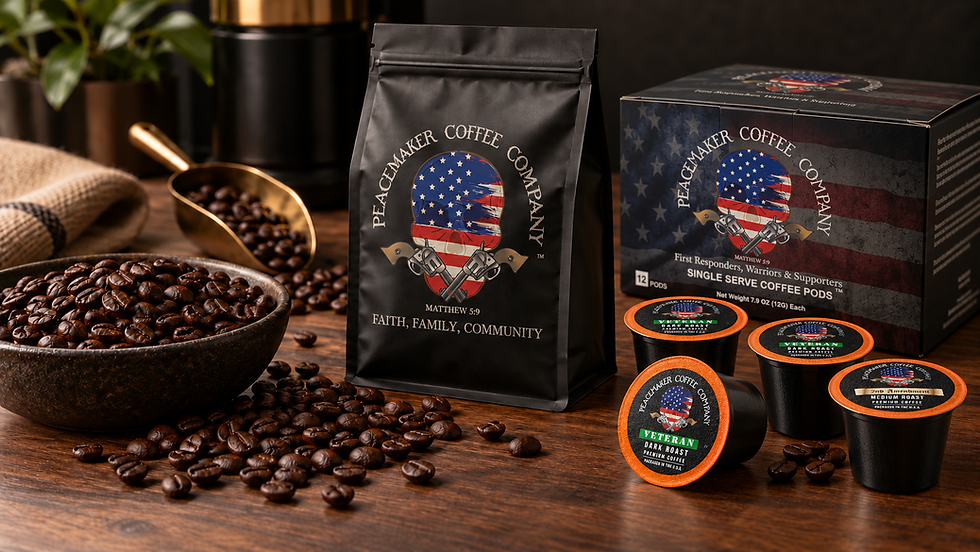
Peacemaker Coffee Company offers coffee-related production capabilities from Toledo, Ohio. Businesses considering a project should contact the company with their product, format, quantity, packaging, and timing requirements.
A detailed conversation is the best way to determine whether the available equipment and services fit the proposed product.
Continue Exploring
Read the complete Private Label Coffee Co-Packing: The Complete 2026 Guide to Starting for the main explanation and related resources.
Coffee Co-Packing FAQs: Minimums, Costs and Packaging
Quick answers to the questions brands most often ask before requesting a coffee co-packing quote.
What does a coffee co-packer do?
A coffee co-packer prepares coffee products for another brand. Services may include grinding, filling and sealing single-serve pods, packing whole-bean or ground coffee into retail bags, applying branded packaging, assembling boxes, and preparing finished products for shipment.
What is Peacemaker Coffee's minimum co-packing order?
For customer-supplied roasted beans, Peacemaker's current minimum is 250 single-serve cups per roast, requiring about 8 pounds of beans. Private-label projects using Peacemaker coffee currently have no minimum order quantity. Custom-printed components have separate supplier minimums.
Can I send my own roasted coffee beans?
Yes. Brands can send roasted whole beans to Peacemaker for grinding and packaging, or choose a Peacemaker light, medium, dark, flavored, or decaf roast for a private-label project.
Does Peacemaker make private-label K-Cups and coffee pods?
Yes. Peacemaker fills compatible single-serve coffee cups and can support preprinted lids, custom foil lids, 12-count boxes, and other packaging options. Keurig and K-Cup are registered trademarks of Keurig Green Mountain, Inc.; Peacemaker is not affiliated with Keurig.
What custom packaging options are available?
Options include custom-printed foil lids, full-color 12-count boxes, custom pouch-style coffee bags, retail bag packaging, and portion or sample packs. Minimum quantities and lead times vary by component.
Where is Peacemaker Coffee's co-packing facility?
Peacemaker Coffee Company roasts, grinds, and packages coffee at its manufacturing facility at 5265 Tractor Road, Suite D, Toledo, Ohio 43612. The facility serves brands across the United States and does not offer retail sales on site.

Great information 🙏